

Advertorial

A Corvanta7 Consumer Explainer

Why Website Consent Banners Matter

Cookie consent banners have become one of the most repeated moments of the browsing day. Here is a plain-English look at why they appear, what the options actually mean, and where a browser extension called Total Adblock fits alongside the choices you make.

A person browsing a website on a laptop as a cookie consent banner appears at the bottom of the screen
The cookie consent banner: a routine prompt worth reading, not just dismissing.

Click a link, and before the article even loads, a box slides up from the bottom of the screen. Accept all? Manage preferences? Reject non-essential? You dismiss it, read for a minute, click another link, and there it is again on the next site.

The repetition makes it easy to treat these banners as noise, something to swat away as fast as possible. But they exist for a reason, and the choices inside them are more meaningful than the routine of clicking suggests.

This report walks through why consent banners appear, how to read the options they offer, and where an ad-blocking extension like Total Adblock fits when you want fewer interruptions overall.

Browser privacy and extension settings with several tracker and cookie toggles switched off
Built-in browser and cookie settings already give you part of the control — a good place to start.
Advertorial: this is a paid promotional article that contains affiliate links. It is intended for general information and does not replace independent research or professional advice.

The Reason That Box Keeps Appearing

A consent banner is a prompt that asks how a website may use cookies and similar technologies before you continue browsing. Cookies are small files a site stores in your browser, and they do a range of ordinary jobs: remembering your preferences, keeping you signed in, measuring how the site performs, and in some cases supporting advertising.

The banner is the point where that use becomes visible to you. Rather than setting cookies silently, the site pauses to show what it intends and gives you a chance to review or adjust it. That is the whole purpose behind the interruption, even when it feels like a formality.

Why the banners appear at all comes down to regulation and transparency. Depending on where a site operates and which rules it follows, it may be required to ask before setting certain cookies, and to offer real alternatives rather than a single "yes." That is why you often see several paths: accept everything, reject the non-essential parts, or open a settings panel to choose.

Necessary Cookies Versus the Optional Kind

The key to answering a banner well is knowing that not all cookies do the same work. They fall roughly into two groups.

Necessary cookies keep the site functioning. They remember the items in your shopping cart as you move between pages, hold a secure login session open, and handle other basics the site cannot work without. These usually cannot be switched off.

Optional cookies serve purposes beyond core function. Some measure visitor activity; others support advertising, helping decide which promotions appear. These are the cookies a banner typically lets you decline or fine-tune without affecting whether the site works.

Show people what is happening, and let them decide.

— On the purpose behind every consent banner

How to Read the Options on Screen

Most detailed banners group cookies by type inside a settings option, so you can keep the essentials while limiting the extras. Spending a moment there turns the banner from an obstacle into a genuine control.

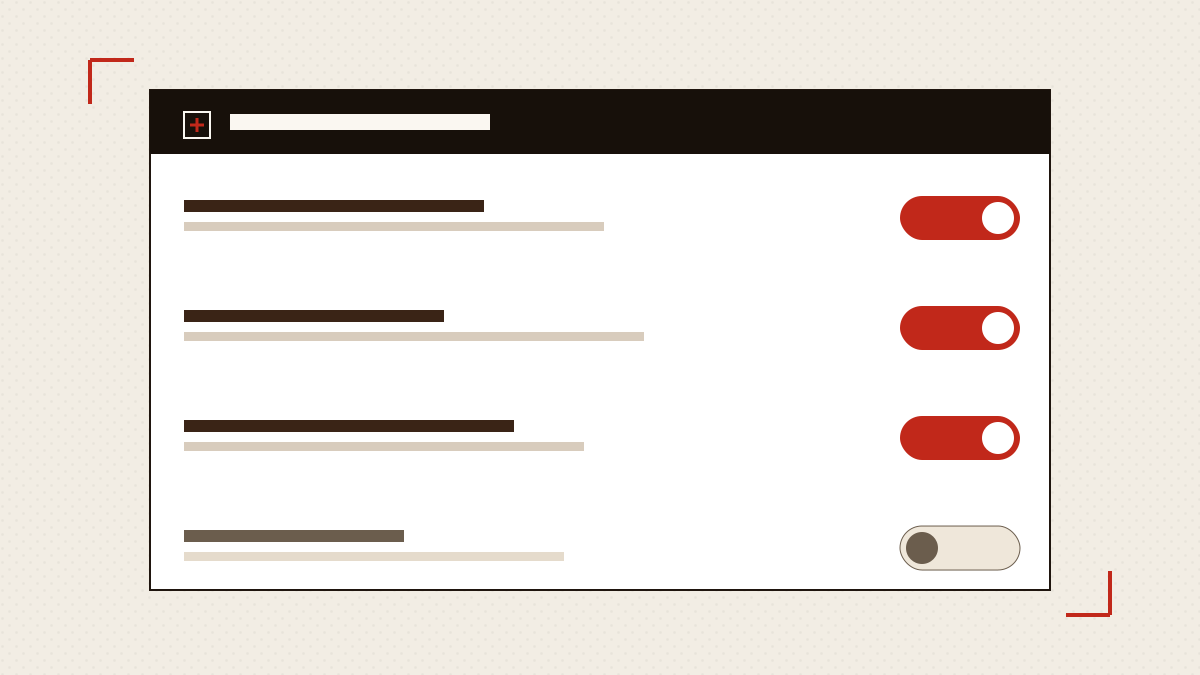
Three paths most banners offer

  • Accept all. Allows both necessary and optional cookies. The fastest option, useful on sites you trust and revisit often.
  • Reject non-essential. Keeps the site working while declining the cookies used for analytics or advertising.
  • Manage preferences. Opens a settings panel where you can review each category and choose which optional cookies to allow.

Close-up of a cookie consent banner on a website with options to accept, reject or manage cookie preferences
Reading the options for a moment, rather than reflexively accepting, turns the banner into a genuine control.

Habits That Keep Browsing Comfortable

Review your browser's privacy settings. Most browsers let you manage cookies, site permissions and tracking protections directly, often with no extra tools required.

Keep the browser updated. A browser on its latest version gives you current performance and security fixes, and often the newest privacy controls too.

Clear unnecessary browsing data now and then, check website permissions periodically, and review your installed extensions, removing any you have stopped using. These are occasional tasks, handled every few months, that leave you with a browser that stays organized.

Where an Ad Blocker Fits

Consent settings shape how sites treat cookies. They do less about the advertising that loads on the page itself — banners, pop-ups, autoplay media and web trackers frequently arrive alongside the content you came to read.

An ad blocker works on this layer, on top of the choices you make in consent banners and browser settings. Its main function is to reduce intrusive ads, and many also limit a portion of the web trackers tied to advertising networks. Because certain elements never load, pages tend to appear cleaner and easier to navigate.

It is worth being precise: an ad blocker is not antivirus software, and it is not a complete cybersecurity solution. It manages advertising clutter and tracking, while your consent choices, browser settings and habits cover the rest.

Why Many Users Choose Total Adblock Browser Extension

The Total Adblock browser extension is designed to block intrusive ads, reduce many web trackers, and create a cleaner browsing environment across the sites it supports. In everyday use, the benefit usually shows up as fewer distractions.

The boundaries are equally clear: it is not antivirus software and does not provide complete cybersecurity protection. Its purpose is narrower — supporting online privacy and improving browsing comfort through ad and tracker management, alongside your browser's built-in privacy settings and responsible habits.

Browse With Greater Focus and Fewer Distractions

Consent banners are easier to handle once you know what they are asking. Read the options rather than reflexively accepting, keep necessary cookies while trimming the optional ones on sites you use often, and pair that with a browser you keep updated and clear of what you no longer need. Adding a tool like the Total Adblock extension on top of those habits can make everyday browsing noticeably calmer.

What Total Adblock Helps With

An honest summary of what the extension is designed to do across supported browsers, alongside your own consent choices.

Blocks Intrusive Ads

Reduces many disruptive display and video ads on supported sites, so the content you came for takes centre stage.

Cuts Down Pop-Ups

Helps reduce the windows that appear over the page and interrupt reading, on top of whatever a site's own consent settings allow.

Limits Web Trackers

Can block a range of tracking scripts tied to advertising networks, working alongside the cookie choices you make in a consent banner.

Lighter Page Loads

Fewer ad elements to fetch can help pages feel less cluttered. Real speed still depends on your device and connection.

Works Across Browsers

Built for popular browsers such as Chrome, Edge and Safari, with support for Android and iOS devices.

Quietly In the Background

Runs as a browser add-on once installed — no complicated configuration and no technical expertise required.

How to Answer a Consent Banner Well

A short, practical sequence — from reading the options to adding a trusted tool.

  1. Read Before You Click

    Look at what the banner is actually offering rather than tapping the first button. Most give you accept, reject non-essential, or manage preferences.

  2. Open the Settings Panel

    On sites you use often, take a moment to review categories and keep necessary cookies while limiting the optional ones.

  3. Review Browser Privacy Settings

    Check your browser's own cookie and permission controls periodically, and clear unnecessary browsing data now and then.

  4. Audit Your Extensions

    Remove add-ons you no longer use, and install new ones only from trusted sources. Fewer, trusted extensions means a tidier browser.

  5. Add Total Adblock

    Install the extension from the Chrome Web Store to help reduce intrusive ads and web trackers on supported sites, on top of your consent choices.

What You Can Expect

General outcomes people tend to look for once they manage consent settings deliberately and add a tool like Total Adblock. Results vary by site and device.

  1. A Clearer Sense of What You Agreed To

    Reading the banner instead of reflexively accepting means you know which cookies are actually active on a given site.

  2. Fewer Optional Cookies Left Active

    Declining non-essential cookies where you can helps limit tracking tied to analytics and advertising on sites you use often.

  3. More Privacy From Web Trackers

    Blocking a range of tracking scripts helps limit how much of your browsing is quietly collected as you move around the web.

  4. Fewer Visual Interruptions

    With many intrusive ads and pop-ups reduced on supported sites, it is easier to stay with the content instead of dismissing distractions.

  5. A Setup That Stays Out of the Way

    Once installed, the extension works in the background, so you spend your time browsing rather than configuring it.

  6. A Complement to Deliberate Choices

    It works alongside your consent decisions and browser settings — an addition to good practice, not a replacement for it.

Consent Banners vs. a Dedicated Extension

A general, honest comparison of what each layer covers. Both have their place and often work best together.

Consideration Consent Banner Choices A Tool Like Total Adblock
Controlling site cookies Yes — accept, reject or manage per site Indirect — works alongside your choices
Blocking intrusive ads Limited — not the banner's purpose Yes — on supported sites
Limiting web trackers Partial — only the cookies you decline Yes — a range of trackers
Setup Reviewed per site, each time it appears Works in the background after install
Ongoing effort Revisit settings as needed on each site Largely hands-off once enabled

Frequently Asked Questions

Short, honest answers about consent banners and what Total Adblock is designed to do.

Why do I see a cookie consent banner on almost every site?

Banners appear so a site can ask how it may use cookies before you continue browsing, rather than setting them silently. Rules on transparency in many places require this kind of notice and real alternatives to a single "yes."

What is the difference between necessary and optional cookies?

Necessary cookies keep the site working, such as holding a login session or a shopping cart, and usually cannot be switched off. Optional cookies support things like analytics or advertising, and a banner typically lets you decline or fine-tune these.

Should I always click "Accept All"?

Not necessarily. On sites you trust and revisit often it can be convenient, but reviewing the settings panel and rejecting non-essential cookies is a reasonable choice on other sites, and does not stop the site from functioning.

Does an ad blocker manage cookie consent for me?

No. Consent settings and an ad blocker cover different layers. An ad blocker like Total Adblock works on top of your consent choices, reducing intrusive ads and many web trackers rather than the banners themselves.

Does Total Adblock replace antivirus software?

No. It is not antivirus and not a complete cybersecurity solution. Treat it as a complement to your consent choices, browser settings and sensible habits rather than a substitute for them.

Which browsers and devices does it support?

It is designed for popular browsers such as Chrome, Edge and Safari, with support for mobile devices on Android and iOS.

Is this page an independent review?

No. This is a paid promotional article that contains affiliate links. You can read the full details in our Advertising Disclaimer and Privacy Policy.

Start Browsing Cleaner

Once you know what a consent banner is asking, the next layer is up to you. If you want a simple way to reduce intrusive ads and web trackers alongside your own cookie choices, the Total Adblock extension can be a helpful addition to your browser.

Add Total Adblock to Chrome

This material is informational and promotional. Individual results may vary. Review the product's details and terms before installing.

Advertising Disclosure

This page is a paid promotional article prepared by Corvanta7 (corvanta7.com). It is intended for information and promotion only and should not be treated as independent journalism, editorial content or consumer advice. The content may contain affiliate links — if you choose to use the featured product through them, we may earn a commission at no additional cost to you. Learn more in our Advertising Disclaimer and Privacy Policy.